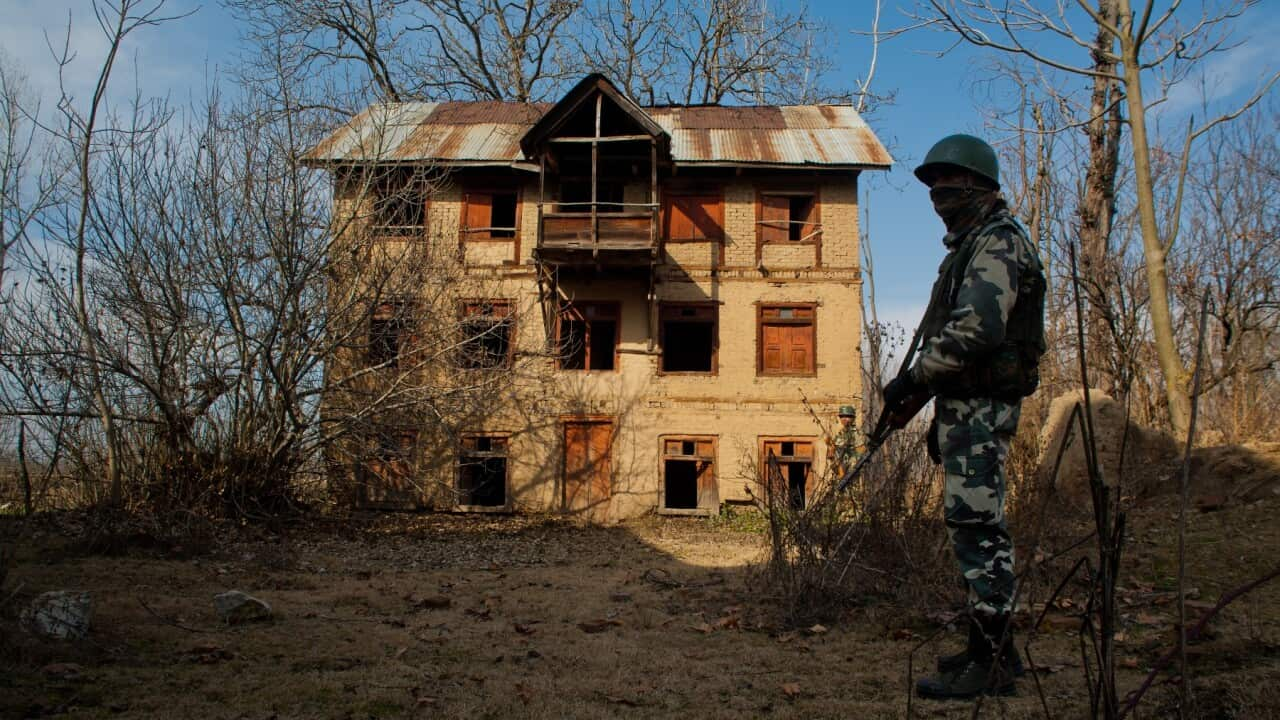
With over 30 years of forced displacement and relocation, the Kashmiri Pandits continue to struggle within the broader identity of "internally displaced persons", as not so identified by the Indian Government, but preferring the term "migrants". The exodus of the 1990s, systemically inflicted by Muslim extremist groups, forced a religious minority of a land historically marked by Shaivism, a tradition rooted in Hindu Philosophy, to flee their ancestral lands. This uprooting severed their cultural ties and eventually led to the cultural and social degradation of Kashmir.
Since then, they have been compelled to stay in inhumane conditions in migrant camps in Jammu and Srinagar. Some have migrated to Delhi and, depending on their ability to build social and cultural capital, settled there; however, the psychological effects of ancestral loss persist. The assistance provided by the government has remained passive, limited to remuneration and relief packages, educational quotas and special employment facilities as a part of affirmative action for the displaced families.
The revocation of the special status of J&K under Article 370 is one measure which indirectly aims to initiate a return of the migrant families to the valley. Nonetheless, the question remains whether the right to return provides them a safe "home" and the ability to build their life again from scratch in a place associated with deep trauma. According to The Borgen Project, Kashmiri Pandits, as of today, constitute the largest internally displaced community in India. But the political and legal terms of their displacement remain contested. The initial narrative of "temporary" settlements have been running long alongside the issue. As Dr. Sudha G. Rajput rightly states, "The moment you admit permanence, you have to provide permanent, sustainable policies", which have not been provided in this case.
Government Measures and Their Limits
Over the years, the Indian Government has launched multiple measures for the relief and rehabilitation of migrant families. For the preservation, protection and prevention of distress sales of migrant properties, the J&K government in 1997 brought in the Migrants Immovable Property (Preservation, Protection and Restraint on Distress Sale) Act, which essentially focused upon the return and resettlement of Kashmiri migrants. Although the restitution of property is one of the legal measures to ensure the same, it must be remembered that for displaced communities, bringing back a sense of community and restoring the broken lineages hold much importance. However, the on-ground enactment of this law has been heavily criticized, as it failed to recognize the different stakeholders involved (second occupants), and there is no independent body looking into the process of property claims. Moreover, the J&K government itself has been accused of illegally occupying the property of IDPs to construct public buildings. As Niketa Singh writes, the petition brought before the Supreme Court of India by the All India Kashmiri Samaj went on to hang between the High Courts due to judicial unresponsiveness and insensitivity to the case.
The relief and rehabilitation packages of 2008 and November 2015 claimed to provide 3,000 government jobs each and to construct 6,000 transit accommodations, of which, reportedly, only 2,296 have been constructed. Beyond this assistance, free ration (rice, flour and sugar) have been included in the list of relief measures for migrant families, which number only 42,129 registered with the Relief Organisation in J&K. This fails to acknowledge the vast majority of unregistered vulnerable families as well as the nutrition required per day to live a healthy life. Ayushman Gold health cards have been issued to the migrant families in transit camps, with a dispensary at each of them. The question stands as to why, even after three decades, there is a need to accommodate the community in transit camps.
The assistance provided has largely remained limited through the lens of "migrants" and has failed to provide durable, long-term solutions for the integration of a community with longstanding loss of hope for return. Using the term "migrants" and failing to recognize these communities as IDPs reflects the blatant avoidance and denial by the government of the violence that occurred, which produced an overwhelming fear of death leading to the large-scale uprooting that constitutes a key factor in the delay of justice.
Key Issues and Gaps
It would be wrong to say that the mass migration was a sudden move due to the militancy that occurred in 1989-90. The issue must be situated in history to understand the various socio-economic and political factors that have been a driving force all the while.
- Discriminatory policies against the minority Kashmiri Pandits (KPs), such as the land reforms of 1950, negatively affected the community's access to and control over land, combined with the lack of effective protection and support from state authorities. The signing of the Instrument of Accession on October 26, 1947, played a key role in setting the conditions for mass migration. This was further intensified by militancy and the targeted killings of Kashmiri Pandits and those suspected of siding with the Indian Government. Mosques were used to instill fear through loudspeakers voicing "Ralive, Tsalive ya Galive." In addition, the handling of the matter by state actors, including the military, remains contested.
- The UNHCR Global Trends Report accounts for 89.3 million people as forcibly displaced worldwide at the end of 2021, of whom 53.2 million were internally displaced people, the rest being registered refugees. The Indian government continues to use the term "migrants" for the displaced KPs, which UNHCR defines as "voluntary movement" undertaken by persons for better economic opportunities or education, and not due to a "direct threat of persecution or death." Recommendations have been given by the Indian judiciary and independent government advisory bodies to confer the status of IDPs on the Kashmiri Pandits, but these remain unimplemented. While there is no binding international law on IDPs, the Guiding Principles on Internal Displacement (1998) define internally displaced persons as those who have been forced to flee their homes or places of habitual residence due to armed conflict, violence or violations of human rights, and who have not crossed an internationally recognized border. The Principles also state, though they are not binding, that the primary responsibility for the return, resettlement and reintegration of IDPs lies with the national authorities. This reiterates the emerging need for India to design a national policy framework for IDPs.
- The financial assistance measures provided to the registered migrant families included cash assistance of ₹3250 per head per month with ₹13,000 as the maximum ceiling per family. Since 2017, this has been done through DBT mode on the PFMS portal. Separately, the 2008 and 2015 rehabilitation packages combined aimed to provide 6,000 government jobs, out of which only 2,724 jobs have been created, and 2,296 transit accommodations out of 6,000 constructed. The Prime Minister Development Packages, 2015 laid out a comprehensive reconstruction plan for J&K with a focus on economic infrastructure, access to basic services, employment and income generation, and strengthening disaster management in lieu of the 2014 floods. The underlying feature in the assistance provided is the focus on jobs, money, and housing. Scholars argue that the government has held a relief-based approach to a rights-based situation, with no emphasis on the overall security and communal conditions of the region which initially led to the mass exodus.
- Equally, it is crucial to highlight the continued denial of justice in this matter, with no convictions for the killings of 1990. This argument is supported through the Supreme Court's observations in December 2023; while upholding the abrogation of Article 370, Justice Kaul proposed the creation of an independent Truth and Reconciliation Commission to investigate human rights violations committed since the 1980s. No further step was taken in this regard. Raina (2026) rightfully said, "Without addressing the past, there can be no meaningful rehabilitation."
Conclusion
Internal displacement in India, induced by armed conflicts, as in the case of Kashmiri Pandits, is not just a marker of mass exodus and displacement but signifies broken lineages, ancestral loss, gradual erosion of their language, lifestyle, and customs, health disorders like depression, anxiety, or panic attacks, and premature aging, largely attributed to the conditions of camps.
The government measures have largely been from the viewpoint of bringing people back to their homes, devoid of life, security, and justice. Recognizing the community as IDPs and building a national framework remains the first necessary step. Return, if it is meaningful, must be voluntary, safe, and dignified.
References
Rahul Pandita. “The Moon has blood clots”
Journal of Internal Displacement. Kashmiri pandits amid conflict-induced displacement: Facts, issues, and the future ahead. View Article
Glasgow Caledonian University ResearchOnline. First step towards a legal understanding of minority groups discrimination: the case of Kashmiri Pandits. View Publication
Niketa Singh. (2021, December). Researching Internal Displacement (RID-WP13). PDF Document
Ministry of Home Affairs, Government of India. Status of Various Schemes and Packages. MHA Document
The Borgen Project. Internal displacement of Kashmiri Pandits. Read Article
Times of India. (2020, March). J&K law commission recommends ban on sale of migrants' properties in Kashmir. Read Article
Observer Research Foundation (ORF). Rehabilitating Kashmiri Pandits. Read Research
Frontline. BJP Kashmir Pandit return promise. Read Article
UNHCR. Guiding Principles on Internal Displacement. UNHCR Guidelines PDF
Khushi Sharma
Research Intern