
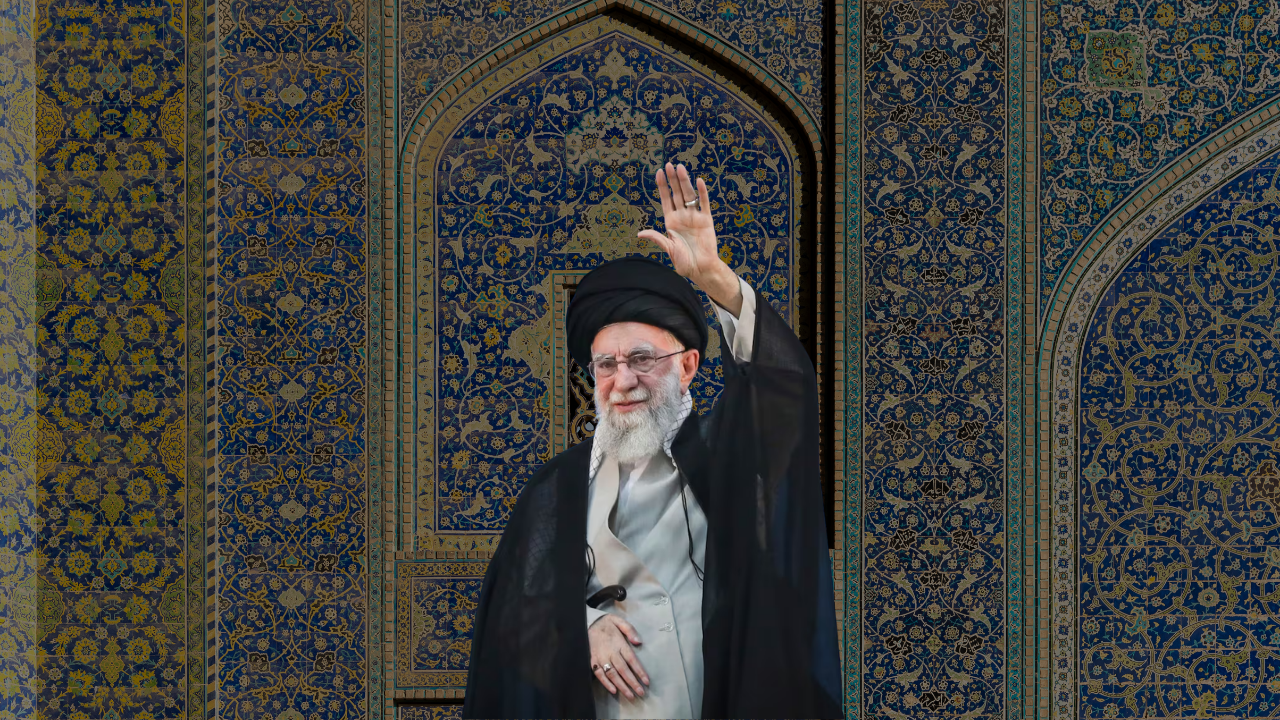
The killing of the Iranian Supreme Leader Ayatollah Ali Khamenei in late February 2026, during joint US-Israeli airstrikes has shookup west Asia disrupting the global supply chains and causing energy insecurity across the globe. While many in India perceive this to be the end of Iran's oppressive theocratic regime, there have been pockets of support, or rather, expressions of grief, mourning, and solidarity emerging from the Shia communities in Kashmir and Lucknow. While this may appear to surprise some, it reflects deep historical, ideological, and religious ties that trace back to the 1979 Iranian Revolution.
As C. Raja Mohan writes; Ruhollah Khomeini had positioned himself as the first Iranian supreme leader of the Islamic world following the revolution. He established a theocratic system adhering to velayat-e faqih (guardianship of the Islamic jurist), which presented a dogmatic, vocal, and an anti-imperialist form of Shia Islam. This model has inspired many Islamic movements globally, portraying the supreme leader as a Messiah defending the faith against Western dominance and perceived injustices.
Ali Khamenei, who succeeded Khomeini in 1989 had held power for over three decades, and hence, carried the same legacy. He was one of the few Gulf leaders to have consistently and sharply criticised Israel and further the cause of Palestine. For Khamenei's followers, his unyielding stance made him a symbol of resistance. As for the Islamic world, the Iranian movement has been the only prolonged revolutionary regime so far.
The Kashmir Connection
Muhammad Iqbal, the poet-philosopher famously described Kashmir as "Iran-e-Sagheer" (Little Iran), due to centuries of Persian cultural influence. Persian served as the region's court language until the late nineteenth century, when it was replaced by Urdu under the Dogra rulers.
In the early 1980s, a young Ayatollah Ali Khamenei had made a brief visit to Srinagar, India; which lasted roughly 48 hours in the city. His arrival generated considerable excitement as crowds gathered at the airport and lined the roads leading into the city, arriving in buses, taxis, and trucks to catch a glimpse of the cleric.
This was the time when Kashmir also witnessed a heightened Shia-Sunni conflict. Khamenei’s visit is deemed so impactful that it is said to have reduced the enimosities. His brief trip included a visit to the historic Jamia Masjid, which was a prominent Sunni mosque and the traditional seat of the Mirwaiz. Ali participated in the Friday prayers alongside Mirwaiz Maulvi Mohammad Farooq, a prominent Sunni cleric. As a Shia speaking inside a major Sunni place of worship, he delivered a brief fifteen-minute address, translated for the congregation emphasising on tenets of unity, faith, and resistance against oppression.
The Shia-Sunni discontent was spread to such extents where mosques had to be ritually cleansed if someone had prayed across the sect. Post Ali Khamenei’s visit, there was relatively more acceptance. Within the Kashmiri Shia community, concentrated in districts such as Budgam and Srinagar, he was the Wali-e-Faqih — a supreme religious authority guiding both spiritual and political life.
The revolutionary message of 1979 which framed resistance and empowerment through faith, found its audience in the region. Over the years, the anniversary of the Iranian Revolution has often been marked with rallies in parts of Kashmir which is amongst the most visible outside Iran. Khamenei also furthered the 'Kashmiriyat' cause calling out the Indian state for its mismanagement in the region; to extents where he also called it oppressive and called for resistance.
"This explains why reactions to Khamenei's death in parts of India, particularly Kashmir, have been shaped by emotion as much as by politics. The mourning witnessed in certain pockets reflects less of an admiration of Iran's theocratric regime and more of the enduring influence of a religious imagination that continues to connect a section of the Indian Shia community to developments in Iran decades after the revolution first reshaped the Islamic world."
Suchit Goel