
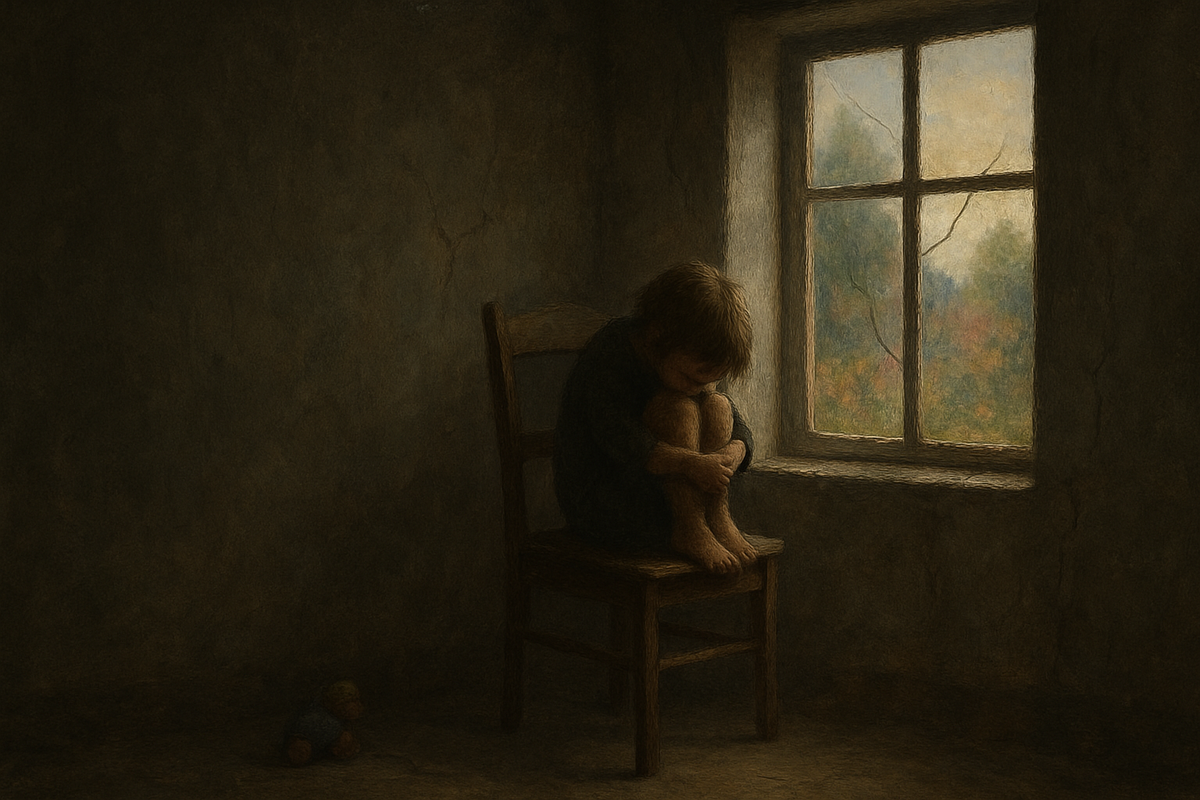
When one observes others carefully, one can easily see how common minor and major mental health problems are in adults. Unlike the physical ailments, like diabetes or high blood pressure, which are flaunted amongst family and friends like trophies, the mental health issues are quietly swept under the carpet and the whole family adopts the ostrich approach. ‘If we don’t look at it or discuss it, it will slink off’. Unfortunately, it doesn’t. It festers and grows.
Psychiatrists say that half of the adult mental health problems can be traced back to their childhood under 14 years of age. A child is not a small sized adult. Their interpretation and processing of events is quite different from that of an adult. Minor irritants for an adult can be a distress creator and traumatic for the child. A trauma is any event that the person is unable to process at that age and stage of life.
A child cannot self soothe when distressed and expects their caretaker to do it for them. If the caretaker is emotionally unavailable, does not realise the child’s distress, does not validate their emotion or soothe them with their words and hugs, there can be a lifelong negative emotional impact on the child.
When done repeatedly it may lead to low self esteem, anxiety, sadness or emotional dysregulation. The first decade and particularly the first five years, including the preverbal stage, are most vulnerable. Trauma of the first two years does not remain in the memory, ’but the scars will be apparent in their personality the entire life’.
The Impact of Early Comfort and Security
When a young child is distressed, they fear for their safety and life. A parent who immediately picks up the child and soothes them, conveys security and helps build their self esteem. A distressed child does not express anger at the parent. On the contrary, they may think that something is wrong with their own selves, and they are not worthy of being taken care of.
This low self worth developed in early years, sticks to them lifelong. Such repeated incidents can force the child to adapt in unhealthy ways (borderline, schizoid or narcissistic adaptations) to gain the attention of their caretaker. Contrary to popular belief, hugging and expressing affection openly to the toddler, does not produce a narcissist. It produces a secure, happy adult who possesses self love. Only a happy person can distribute happiness, a person who knows their own worth and love themselves, is able to give love to others.
When a Parent is Emotionally Unavailable
At times, a mother is unable to bond with their own children leading to her emotional unavailability. This can happen if the mother herself is suffering from some apparent or inapparent mental health problem. In such cases, it is important for other family members to pitch in, to provide the needed emotional support to the child.
Another common scenario is when a parent has to go away due to job or some other reason. A child of 1-3 years or so, cannot understand the reason and feels abandoned. It can be a highly traumatic situation for the child.
Significance of emotional well being of children is quite high. It is instrumental in creating the personality that will be carried lifelong. Unfortunately, no particular attention is given to this aspect, leading to misfit people coming from apparently healthy happy homes. Core areas of focus remain food, nutrition and academic and other achievements in the majority of houses.
The Need for Presence and Unconditional Love
In a nutshell, it is important for parents to be available for their children, physically as well as emotionally, particularly in early life. Presents and gifts do not compensate for the parents’ absence. Children need unconditional love, and frequent hugs, more so after they have been ticked off.
Building a Happier and Healthier Society
To build a happier society and reduce crimes and suicides, steps need to be taken from early life. Parenting is one of the most complex tasks for which there is no rule book and no life skills are imparted by the education system. There should be more parenting counsellors in society, a task earlier performed by family elders. A psychologist/counsellor in each school who regularly interacts with the children, parents, as well as the teachers would be helpful.
Dr. Alka Goel