

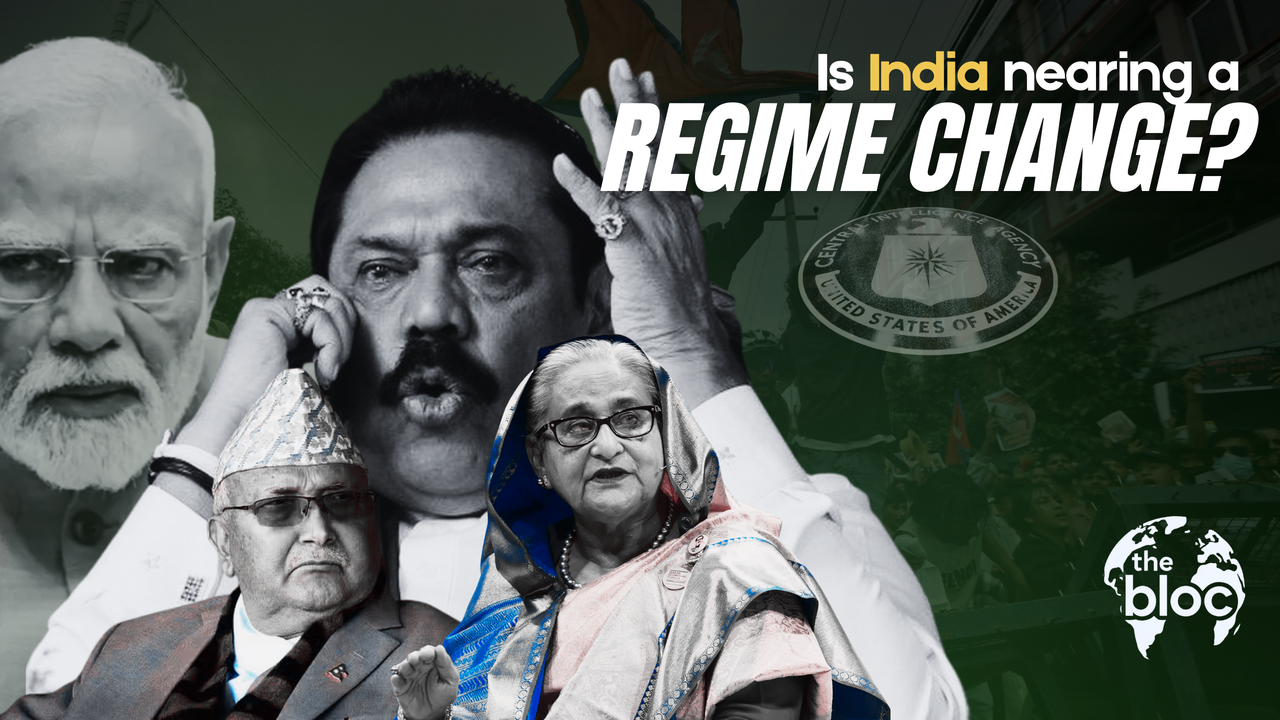
South Asia is grappling with political turmoil that has become hard to ignore. Sri Lanka’s government collapsed in 2022 after an economic crisis that culminated in a sovereign default and an IMF bailout to stabilise the island; mass anger over shortages and inflation toppled the longstanding Rajapaksa family.
Last year, Bangladesh experienced a dramatic fall from grace for Prime Minister Sheikh Hasina after a large-scale, youth-driven protest and a violent crackdown; what initially began as student mobilisation turned into a nationwide crisis that resulted in her ouster.
Nepal is now witnessing widespread Gen-Z anti-corruption protests, which were initially sparked by a controversial social-media ban. This has forced prime minister K.P Sharma Oli to resign, multiple students and protesters have lost their lives while Nepal burns in anarchy.
Viewed together, these episodes show a repeatable pattern. Firstly, blatant corruption and a ruling elite: where officials visibly enriched themselves as services failed and trust collapsed amongst the populace fueling rage and insecurity.
Second, dynastic politics which concentrated power amongst few and narrowed visible alternatives; where families or cliques dominated, and the electorate felt locked out with no real alternatives.
Third, impoverishment of the masses, lack of public services and policy paralysis which converted political grievances into a survival crisis; food, fuel, electricity or employment which became immediate fuel for unrest. In smaller countries, with weak institutional channels, these three factors have interacted rapidly and protests have escalated to regime collapses.
India shares many of the same faultlines: corruption, inequality, nepotism and governance gaps are persistent realities. But the country’s political trajectory differs not because these problems are absent, but because of a robust structural and institutional apparatus that tends to convert the rage into managed contestation instead of turning to anarchy or a sudden overthrow.
India’s electoral process is expansive and frequent. The tripartite Local, state and national polls provide recurring, legitimate avenues for grievances to be translated into political change, even if the change isn’t tangible or swift, it provides hope to the citizenry. Regular elections across states gives citizens repeated, peaceful opportunities to remove incumbents. This is absent in other nations in South Asia where power is restricted and shared amongst certain families with no real alternatives.
Second, India retains a functioning set of checks which might not be perfect, but are durable. Courts continue to act as a forum to challenge executive excess. An independent judiciary and rule-of-law processes slow precipitous shifts and gives the opposition the space to contest policies through institutional means rather than street violence.
Third, the scale and federal character of India reduces the potential mobilisation. What unites people in a small capital may not aggregate easily across a vast, multilingual nation like Bharat. Discontent tends to be regionalised and can be contained by state and local institutions, reducing the chance of national uprising.
Fourth, while nepotism is prevalent, no single dynasty monopolises national power. India has powerful political families at state and national levels, but the competition between parties and frequent turnover means that voters often have credible alternatives and they use them for good. This prevents the pervasive “no alternative” sentiment that amplifies protests into existential challenges elsewhere.
Finally, empathy! India’s large-scale delivery systems blunt immediate desperation. The National Food Security Act currently covers roughly 80.6 crore people under subsidised foodgrain entitlements, providing a basic safety net across the vast expanse of the country.
Rural household electrification or the PM Saubhagya Yojana, has electrified millions of homes and is pushing India towards a near-universal village electrification. This has materially changed livelihoods in remote areas and reduced the kind of infrastructural collapse that feeds such mass unrest.
India’s combination of electoral avenues, judicial recourse, federal structure and welfare delivery makes a sudden regime change far less likely than in some of its neighbours.
Lastly, South Asia’s recent political upheavals are a warning about how corruption, dynastic takeover and deprivation can combine to topple governments quickly. India faces the same risks, but its democratic architecture and social-service footprint have so far channelled dissent into EVMs, courtrooms and regional politics rather than a systemic rupture. That difference is the reason India remains an exception in its increasingly restless neighbourhood.